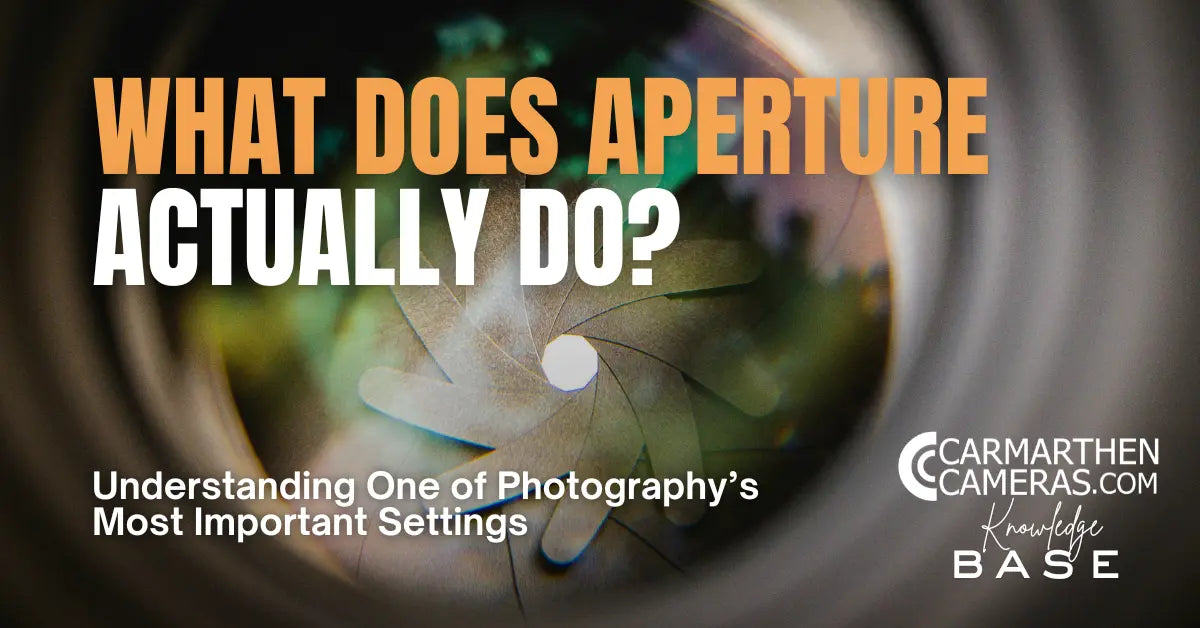
What Does Aperture Actually Do? Understanding One of Photography’s Most Important Settings
Aperture is one of the most important settings in photography—but it’s also one of the most confusing for beginners. You’ve probably seen settings like f/1.8, f/4, or f/11 on your camera or lens, but what do they actually mean?
In simple terms, aperture controls two major things:
-
How much light enters your camera
-
How much of your image appears in focus
Understanding aperture is a huge step toward moving beyond auto mode and gaining creative control over your photography.
In this guide, we’ll explain what aperture does, how it affects your images, and when to use different aperture settings in real-world photography.

What Is Aperture?
Aperture refers to the opening inside your lens that lets light pass through to the camera sensor.
You measure aperture using f-numbers such as:
-
f/1.8
-
f/2.8
-
f/5.6
-
f/11
The confusing part?
Smaller numbers mean a larger opening, while larger numbers mean a smaller opening.
For example:
-
f/1.8 = very wide opening
-
f/11 = much smaller opening
Think of it like a pupil in your eye:
-
In dark conditions, it opens wider
-
In bright conditions, it gets smaller

🌙 Aperture Controls Light
One of aperture’s main jobs is controlling brightness.
Wide Aperture (Low f-number)
Examples:
-
f/1.4
-
f/1.8
-
f/2.8
These allow more light into the camera.
👉 Great for:
-
Low light photography
-
Indoor shooting
-
Night photography
Narrow Aperture (High f-number)
Examples:
-
f/8
-
f/11
-
f/16
These reduce the amount of light entering the camera.
👉 Great for:
-
Bright outdoor conditions
-
Landscapes
-
Keeping more of the scene in focus

🎯 Aperture Controls Depth of Field
This is where aperture becomes creative.
Depth of field refers to how much of your image appears sharp from front to back.
Wide Aperture = Blurry Backgrounds
Examples:
-
f/1.8
-
f/2
This creates a shallow depth of field, where:
-
Subject stays sharp
-
Background becomes blurred
👉 Perfect for:
-
Portraits
-
Wildlife photography
-
Product photography
-
Cinematic shots
This soft background blur is often called bokeh.

Narrow Aperture = More in Focus
Examples:
-
f/8
-
f/11
This creates a deeper depth of field, keeping more of the image sharp.
👉 Perfect for:
-
Landscapes
-
Architecture
-
Group photos
-
Travel photography

📸 Real-World Examples
Portrait Photography
A photographer shooting portraits may use:
-
f/1.8 or f/2.8
This helps separate the subject from the background for a more professional look.
Landscape Photography
A landscape photographer might choose:
-
f/8 or f/11
This keeps foreground and background detail sharp throughout the image.
Wildlife Photography
Wildlife photographers often use:
-
Wider apertures like f/4 or f/5.6
This helps:
-
Keep shutter speeds fast
-
Blur distracting backgrounds
-
Isolate subjects

⚡ How Aperture Affects Other Settings
Aperture works alongside:
-
Shutter speed
-
ISO
Together, these form the exposure triangle.
For example:
-
A wide aperture lets in more light
→ allowing faster shutter speeds or lower ISO
👉 This is why lenses with wider apertures are so useful in low light.

🔍 Does Lens Quality Matter?
Absolutely.
Lenses with very wide apertures (like f/1.4 or f/2.8):
-
Usually perform better in low light
-
Create stronger background blur
-
Often produce sharper images
However, they can also:
-
Be larger
-
Cost more
-
Require more precise focusing
👉 You don’t need the most expensive lens to get great results.

⚠️ Common Mistakes to Avoid
-
Using very wide apertures for group shots
-
Assuming lower f-number always means “better”
-
Forgetting depth of field changes with distance
-
Shooting landscapes too wide open
-
Focusing incorrectly at shallow depth of field

💡 Pro Tips
-
If you’re unsure where to start, try:
-
f/1.8–f/2.8 for portraits
-
f/5.6 for general photography
-
f/8–f/11 for landscapes
-
-
Wider apertures work best when your subject is separated from the background
-
Don’t always shoot wide open—many lenses are sharpest slightly stopped down
Pro tip: Use your camera’s depth of field preview button (if available) to see how aperture changes the amount of the image in focus before taking the shot.
Recommended Gear
If you want to experiment with aperture creatively, consider:
-
A fast prime lens (great for portraits and low light)
-
A versatile zoom lens with a constant aperture
-
ND filters for shooting wide apertures in bright conditions
👉 Even an affordable prime lens can dramatically change your photography.

Conclusion
Aperture is much more than just a camera setting—it’s one of the most powerful creative tools in photography. Once you understand how it affects light and depth of field, you’ll have far more control over how your images look and feel.
The best way to learn aperture is through experimentation. Try shooting the same scene at different f-stops and see how your images change.
Over time, choosing the right aperture will become second nature—and your photography will improve because of it.